
For a Competition by DRES (2025)
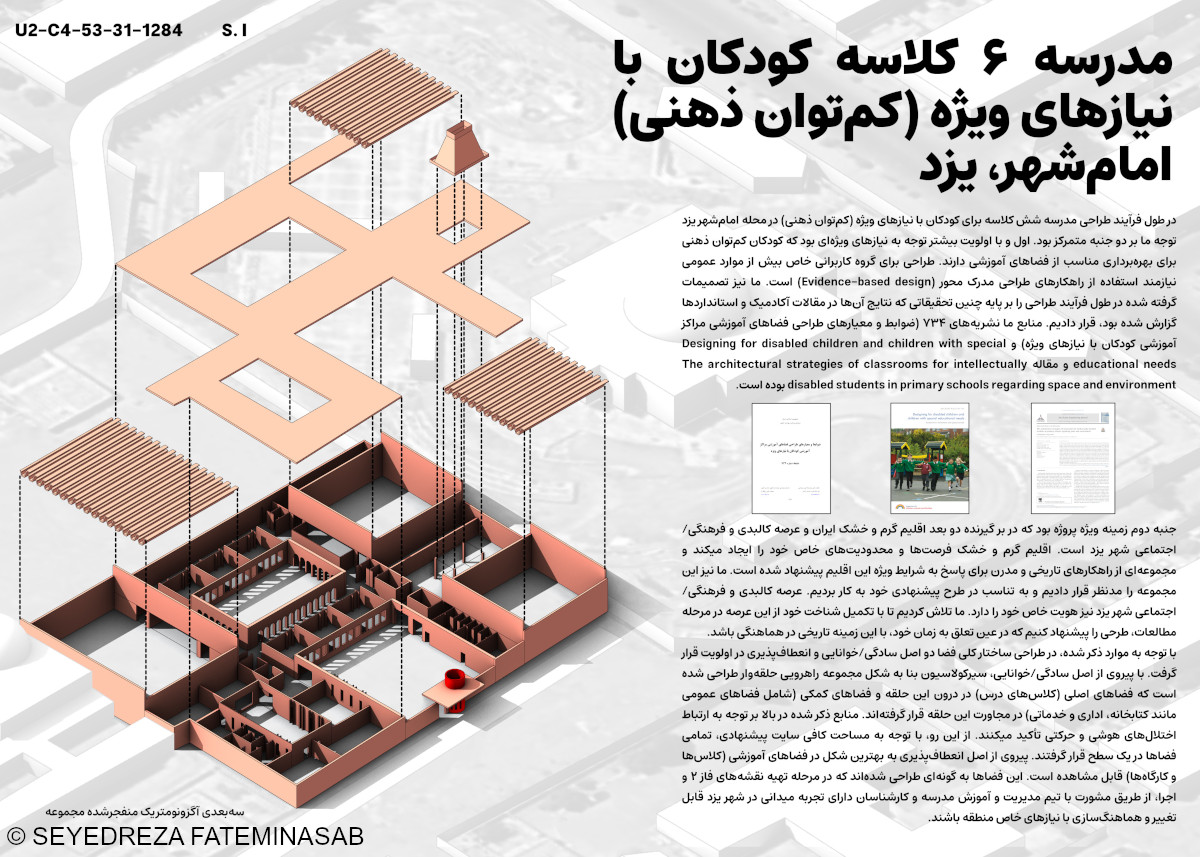
During the design process of a six-classroom school for children with special needs (intellectual disabilities) in the Imamshahr neighborhood of Yazd, my attention was focused on two main aspects. First, and with greater priority, I focused on the specific needs that children with intellectual disabilities have in order to appropriately utilize educational spaces. Designing for a specific user group requires more than general considerations and necessitates the use of evidence-based design strategies. I based my design decisions on such research, the results of which have been published in academic papers and building standards. My resources included publications #734 (Guidelines and Criteria for Designing Educational Spaces for Children with Special Needs) and #102 (Designing for Disabled Children and Children with Special Educational Needs) and the article “The Architectural Strategies of Classrooms for Intellectually Disabled Students in Primary Schools Regarding Space and Environment.“

Sheet 01
Sheet 02
Sheet 03
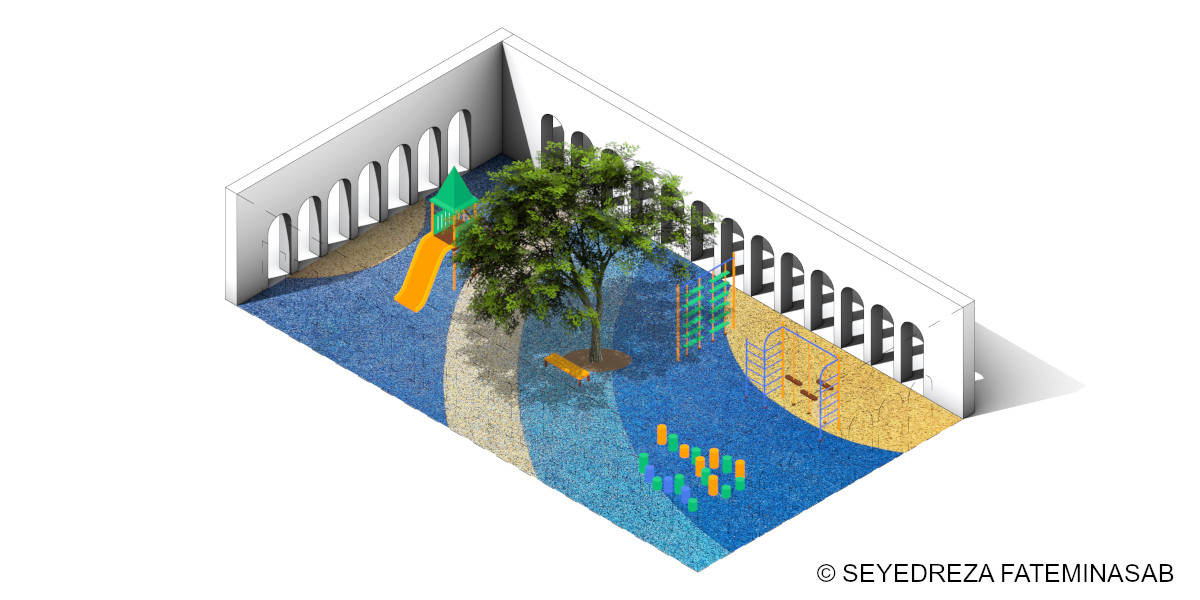
Central Yard/Playing Area
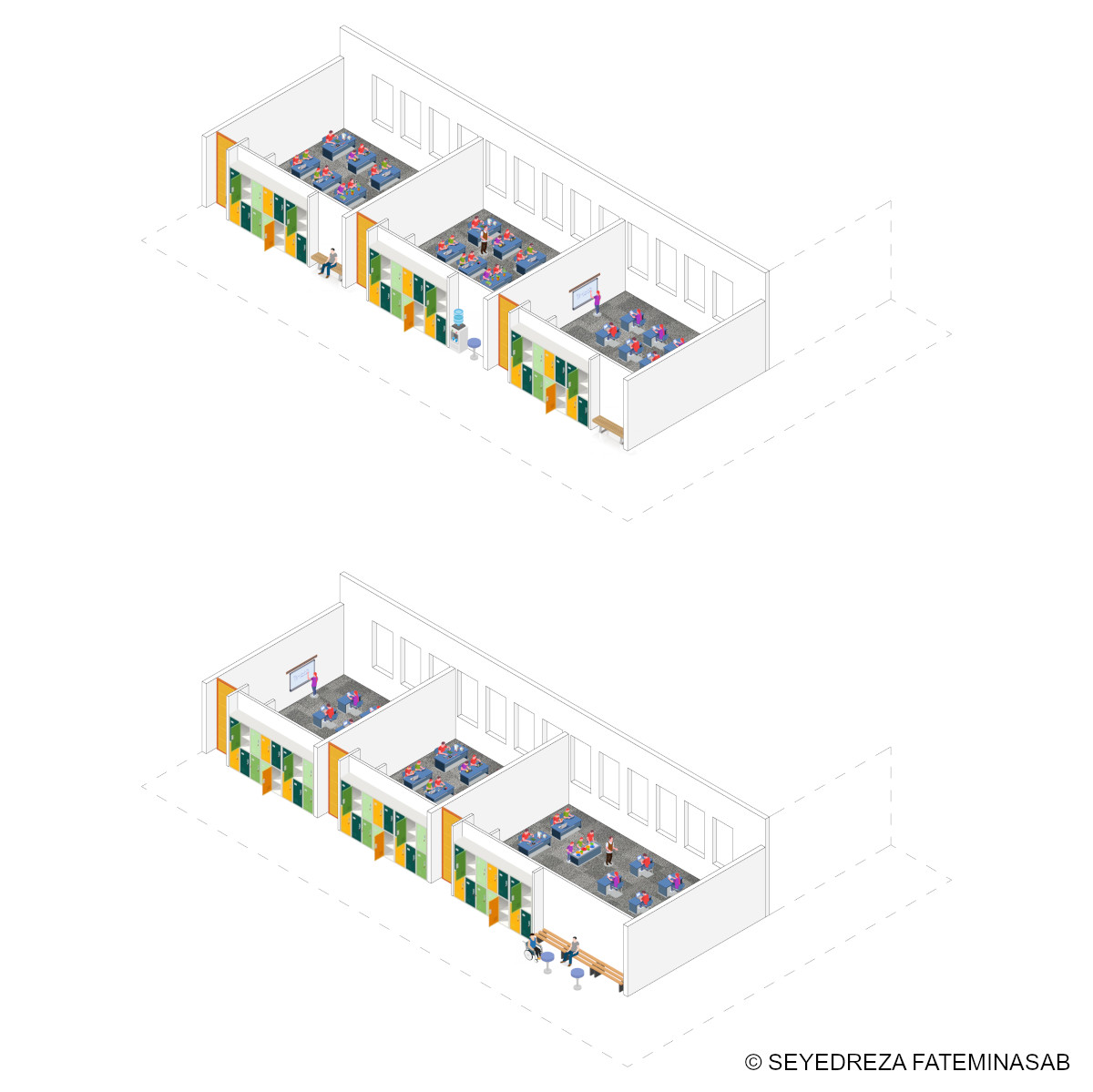
Classes Flexibility
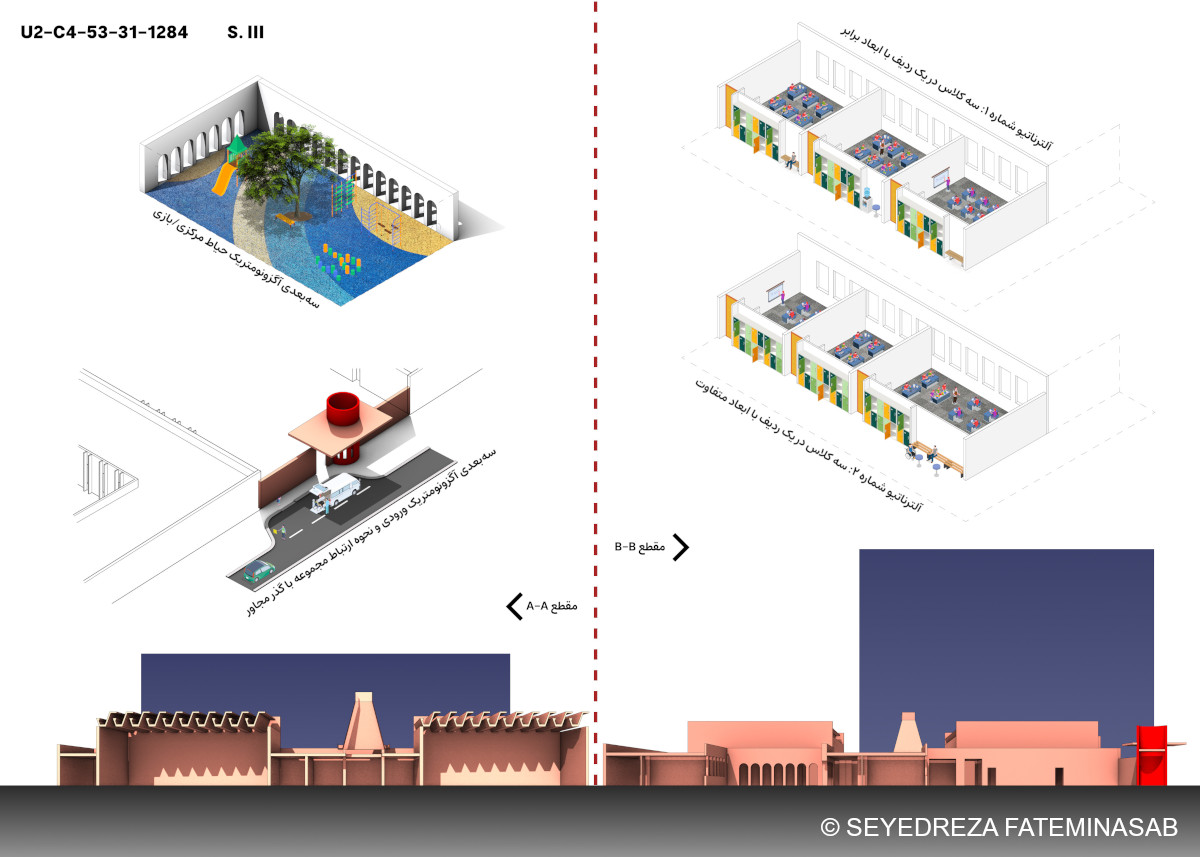
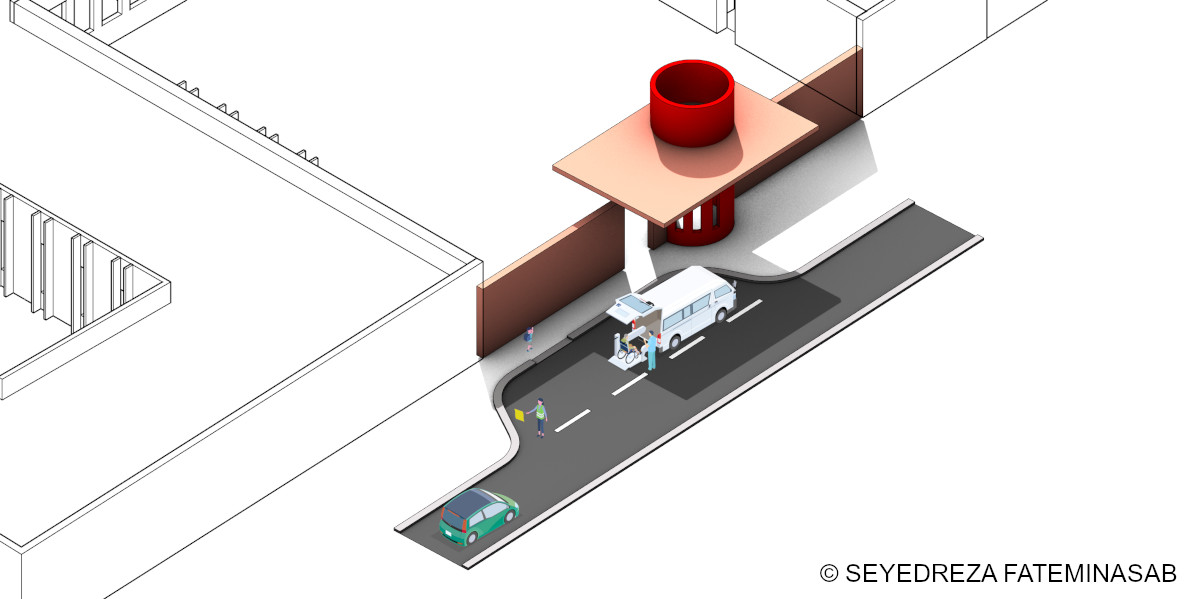
Entrance
The second aspect of the project was its unique context, which involved two key factors: the hot and dry climate of Iran and the spatial, cultural, and social fabric of Yazd. The hot and dry climate presents specific opportunities and limitations, and a range of historical and modern solutions have been proposed to address the unique conditions of this climate. I considered this range and applied it to my proposed design. The spatial and cultural/social aspects of Yazd also have a distinct identity. I aimed to propose a design that, while being of its time, would harmonize with this historical context.
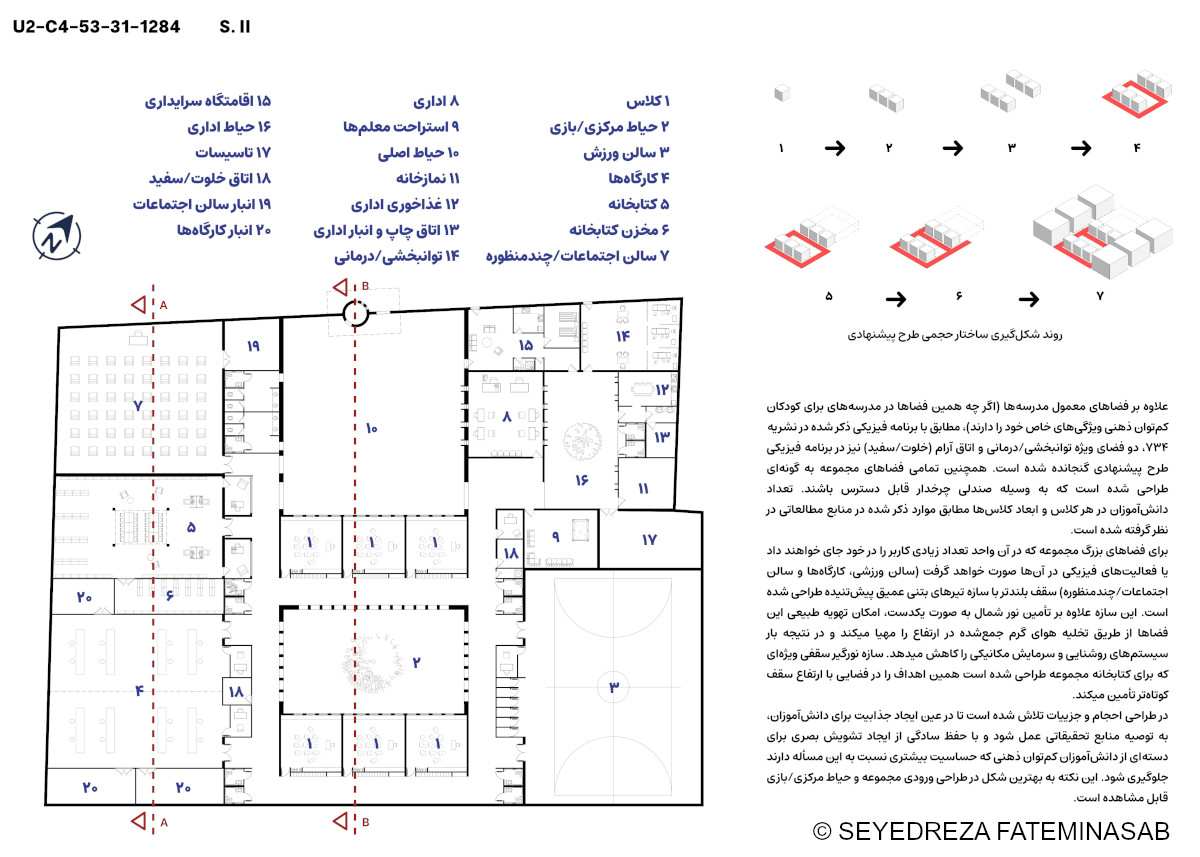
In light of the above factors, two principles were prioritized in the design of the overall space structure: simplicity/readability and flexibility. Following the principle of simplicity/readability, the building’s circulation was designed in the form of a looped corridor, with the main spaces (classrooms) placed within this loop and auxiliary spaces (including public spaces such as the library, administration, and service areas) positioned adjacent to it. The mentioned resources emphasize the connection between cognitive and motor impairments, which led me to place all spaces on a single level, given the ample area of the proposed site. The principle of flexibility is best reflected in the educational spaces (classrooms and workshops). These spaces were designed in a way that, during the preparation of phase 2 drawings and construction, they could be adjusted and coordinated with the specific needs of the region through consultation with the school management team and field-experienced experts in Yazd.
In addition to the typical school spaces (which, in schools for children with intellectual disabilities, require their own specific features), in accordance with the physical program mentioned in publication #734, two special spaces for rehabilitation/therapy and a calming room (quiet/white room) were also incorporated into the proposed design. Furthermore, all spaces in the complex were designed to be wheelchair accessible. The number of students in each classroom and the dimensions of the classrooms were considered in accordance with the guidelines provided in the study resources.
For the larger spaces in the complex, which will accommodate a significant number of users at once or where physical activities will take place (such as the gymnasium, workshops, and multipurpose hall), a higher ceiling with pre-stressed concrete beam structure was designed. This structure not only provides uniform northern light but also allows for natural ventilation by expelling hot air accumulated at higher elevations, thus reducing the load on lighting and mechanical cooling systems. The skylight structure designed for the library serves these same goals in a space with a lower ceiling height.
In the design of volumes and details, efforts were made to both create an appealing environment for students and adhere to the recommendations of research resources. The design maintains simplicity to avoid visual confusion for intellectually disabled students who may be more sensitive to such issues. This approach is particularly evident in the design of the entrance to the complex and the central yard/play area.